
200 Training Places: Sedibeng Water Skills Programme 2026 Explained
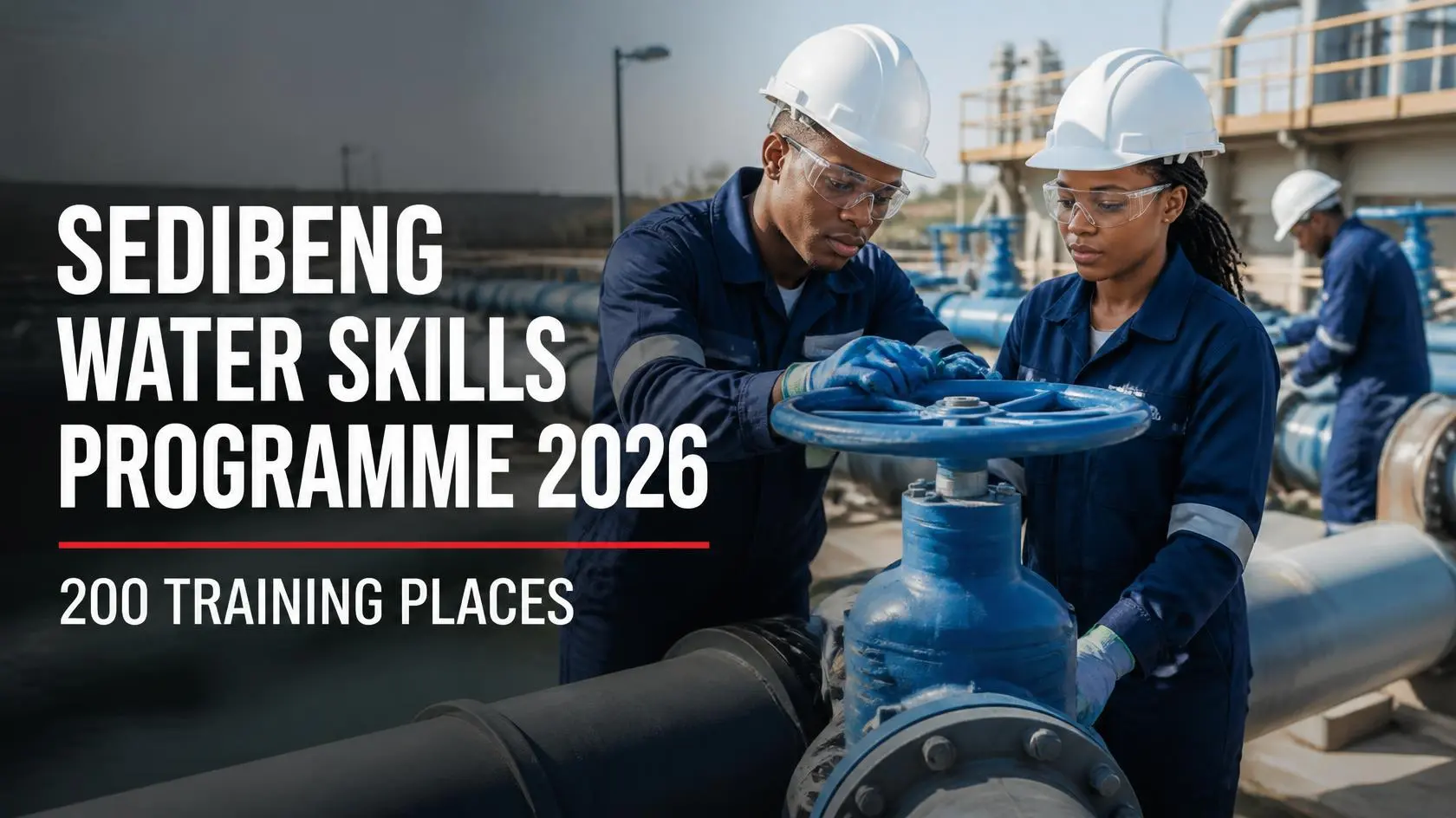
Sedibeng Water Skills Programme 2026: 200 Training Places
A skills-development opportunity connected to water and wastewater reticulation was made available to unemployed community members in the Sedibeng area, with 200 training places offered for a three-month programme.
The programme focused on practical skills linked to water distribution, wastewater systems, sanitation and municipal infrastructure. According to the published programme information, successful participants were to receive a R2,400 stipend for the full three-month training period.
Join Our WhatsApp Channel! Stay updated with our latest news and updates directly on WhatsApp.
Join WhatsApp ChannelThe opportunity was aimed at people who wanted to build practical experience in an essential public-service sector while exploring longer-term careers in water, sanitation and related technical fields.
Sedibeng Water Skills Programme 2026 Skills Programme at a Glance
| Details | Information |
|---|---|
| Programme | Water and Wastewater Reticulation Skills Programme |
| Training places | 200 |
| Duration | 3 months |
| Age | 21–35 |
| Education | Grade 12 |
| Employment status | Unemployed applicants |
| Stipend | R2,400 for the full three months |
| Application method | Hand delivery |
| Application deadline | 9 September 2026 |
The programme was linked to Sedibeng District Municipality and supported by the Local Government Sector Education and Training Authority (LGSETA).
What Was the Sedibeng Water and Wastewater Programme?
The Water and Wastewater Reticulation Skills Programme was designed to introduce participants to technical work associated with the infrastructure used to supply water and manage wastewater.
Water and wastewater reticulation covers systems such as pipelines, water distribution networks, sewer networks and sanitation infrastructure. These systems are essential to communities and require workers with appropriate technical knowledge and practical skills.
For unemployed applicants, a short programme like this can provide useful exposure to municipal infrastructure and help participants decide whether they want to pursue further training in the sector.
Who Could Apply?
The published requirements stated that applicants needed to meet several basic conditions.
Applicants had to:
- Be between 21 and 35 years old
- Be unemployed
- Have completed Grade 12
- Provide a certified copy of their Grade 12 certificate
- Provide a copy of their South African ID
- Submit an updated CV
- Follow the required hand-delivery application process
The published information did not list a tertiary qualification as a compulsory requirement, making Grade 12 the main educational requirement for the programme.
What Training Was Offered?
The programme lasted three months and focused on introductory skills related to water and wastewater reticulation.
Training exposure could include areas such as:
- Water distribution
- Wastewater systems
- Sewer networks
- Reticulation infrastructure
- Sanitation services
- Municipal water operations
- Infrastructure maintenance
The programme Sedibeng Water Skills Programme 2026 should be viewed as a skills-development opportunity rather than a guarantee of qualification as a plumber, water process controller or another regulated technical professional. Additional accredited training may be required for specific occupations.
How Much Was the Stipend?
The programme information stated that learners would receive a R2,400 stipend for the three-month programme.
It is important not to describe this as R2,400 per month. The published information specifically indicates that the R2,400 amount applied to the entire three-month training period.
Documents Required
Applicants were expected to prepare the documents requested for the application, including:
1. Certified Grade 12 certificate
A certified copy of the matric certificate was required.
2. South African ID copy
Applicants needed to provide a copy of their identity document.
3. Updated CV
The CV needed to contain accurate contact details and relevant information about the applicant.
Keeping clear copies of documents ready can make future applications easier, especially when an opportunity requires physical submission within a limited time.
How Were Applications Submitted?
Unlike many learnership and skills programmes that use online application forms, this opportunity required applicants to hand-deliver their applications.
The published instructions gave different submission points for applicants in the relevant areas.
Vanderbijlpark
Department of Labour
64 Eric Louw Street
Vanderbijlpark
Meyerton
Meyerton Town Hall
25 Mitchell Street
Meyerton
Applications were scheduled for submission on 9 September 2026 between 08:00 and 15:00. Applicants were also instructed to bring a pen because forms had to be completed during the submission process.
Is the Sedibeng Programme Still Open?
No. The stated application deadline has passed.
The published deadline was 9 September 2026, with applications accepted between 08:00 and 15:00. As of 13 September 2026, that application window is closed.
Applicants should not travel to the listed submission points expecting applications to be accepted after the deadline unless Sedibeng District Municipality or another authorised source announces an extension or a new intake.
Why Water and Wastewater Skills Matter
Water and sanitation infrastructure plays a major role in everyday community life.
Homes, schools, businesses and public facilities all depend on systems that provide water and safely manage wastewater. Maintaining these systems requires practical knowledge of infrastructure, pipes, distribution networks and other municipal services.
That means training in this area can be a useful starting point for young people interested in careers connected to water services, sanitation, infrastructure and technical municipal work.
What Can Applicants Do Next?
Although this specific 2026 intake is closed, people interested in the field can use the experience as a guide for future opportunities.
Building a CV around practical skills, keeping academic documents ready and monitoring official municipal and sector opportunities can help when similar programmes open.
Those interested in developing a longer-term career in the sector can also investigate further accredited training in areas related to water process control, plumbing, wastewater treatment, infrastructure and sanitation.
Be Careful With Unofficial Recruitment Claims
Job seekers should be cautious when finding learnerships and training programmes online.
A legitimate opportunity should provide clear information about the programme, eligibility requirements, application process and closing date. Applicants should be especially careful about anyone asking for money in exchange for guaranteed placement.
For municipal or public-sector opportunities, it is best to verify important information against the relevant official organisation before submitting personal documents.
Sedibeng District Municipality’s official website lists its vacancies and other public information.
Frequently Asked Questions
How many people could be accepted?
The programme offered 200 training places.
How long was the training?
The programme was structured to run for three months.
What qualification was required?
Applicants needed to have completed Grade 12.
What was the age requirement?
The published age range was 21 to 35 years.
How much was the stipend?
The stated stipend was R2,400 for the full three-month programme, not R2,400 every month.
Can I still apply?
No. The published application date was 9 September 2026, so this intake has closed.
Final Word
The Sedibeng Water Skills Programme 2026 offered 200 places for unemployed community members who met the stated age and Grade 12 requirements.
The three-month programme provided exposure to water and wastewater reticulation skills, while the published stipend was R2,400 for the entire training period.
Although the Sedibeng Water Skills Programme 2026 application period has ended, the opportunity highlights the growing importance of practical skills linked to water, sanitation and municipal infrastructure. Job seekers interested in this field should continue watching for future skills programmes and related training opportunities.
Important: Always verify future opening dates, requirements and application instructions against the relevant official announcement before applying.